
Switching to VOIP Phone System in 2026
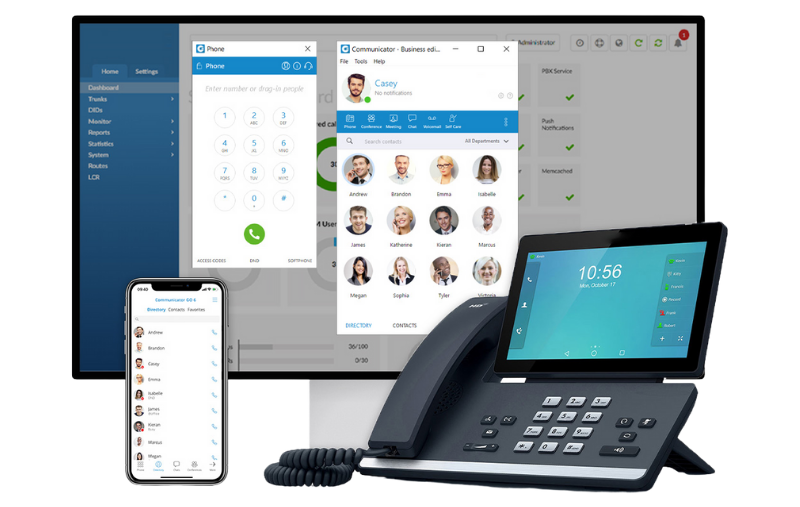
VoIP for Small Business 2026: Why You Should Switch
In the rapidly evolving business landscape of 2026, traditional office landlines are becoming the "fax machine" of telecommunications—a relic of a bygone era. As copper-wire networks (PSTN) are phased out globally, businesses of all sizes are migrating to the cloud.
But upgrading to a VoIP (Voice over Internet Protocol) system isn't just about replacing an old wire; it’s about fundamentally transforming how your business communicates, scales, and survives in a digital-first economy. Here is why the switch to VoIP is the most critical technology upgrade your office will make this year.

1. Radical Cost Reduction (The 50% Rule)
The most immediate "Why" is the impact on your bottom line. Traditional phone systems (PBX) are notorious for high upfront hardware costs, expensive technician visits, and exorbitant long-distance fees.
- Lower Monthly Overheads: Businesses that switch to VoIP typically see a 30% to 50% drop in their monthly phone bills. Since VoIP uses your existing internet connection, you eliminate the need for a separate telephony service provider.
- Minimal Hardware Investment: While you can still invest in a traditional desk phone, you no longer need to do that for every employee. A modern VoIP system can run on "softphones"—apps on the laptops and smartphones your team already owns.
- International Freedom: For businesses with global clients, VoIP is a game-changer. Long-distance charges are drastically lower, with international rates plummeting to pennies per minute because the data travels over the web rather than through international copper gateways.
2. Mobility: The End of the "Desk-Tether"
In 2026, work is something you do, not a place you go. VoIP is the engine that makes the hybrid and remote work models an asset, no longer a disadvantage.
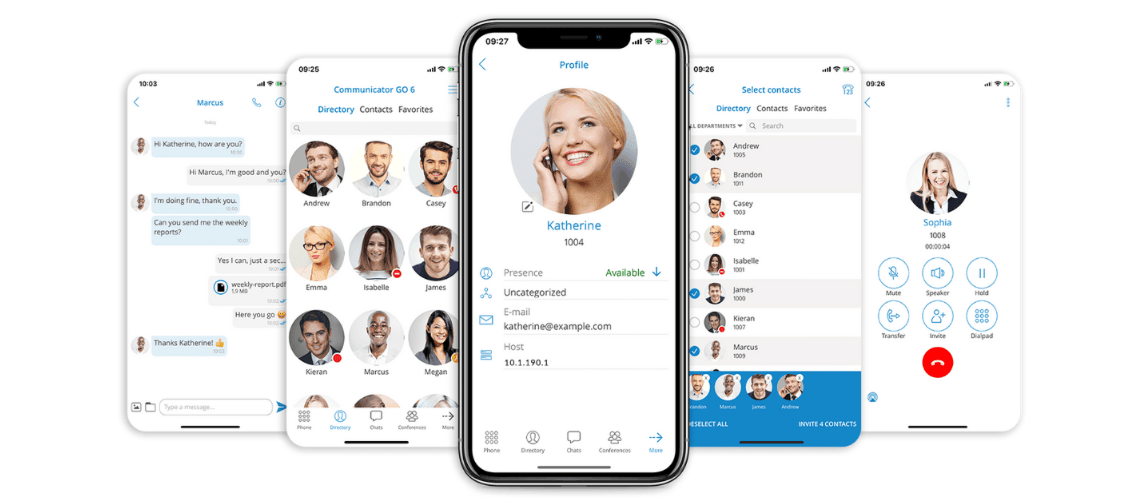
- One Number, Any Device: Your business extension is no longer a physical object on a desk. It is a digital identity. Whether an employee is in the office, at a coffee shop in while on the road, or working from a home office, their business number follows them.
- Seamless Call Flipping: VoIP allows you to answer a call on your desktop computer and "flip" it to your mobile device mid-conversation as you walk out the door. The client never hears a click, and the connection remains crystal clear.
- Professionalism Everywhere: When an employee calls a client from their personal smartphone using the VoIP app, the caller ID shows the Company Name and Office Number, not their private cell digits.
3. Enterprise Features for Every Budget
A decade ago, only Fortune 500 companies could afford "Auto-Attendants" and "Call Queuing." VoIP has democratized these high-end tools, allowing a two-person startup to sound like a global corporation.
- The Virtual Receptionist: Your provider can help to set up complex call trees, for example: "Press 1 for Sales, Press 2 for Billing, etc." menus in minutes. These can be programmed to change based on the time of day, ensuring after-hours callers are routed to an emergency line or a specific voicemail.
- Voicemail-to-Text: In a world of back-to-back meetings, nobody has time to listen to three-minute voicemails. VoIP systems now use AI transcription to send a text version of your voicemails directly to your email or Slack, allowing you to "read" your calls at a glance.
- Remote Connection Empowered: Incoming calls can be centrally managed and then easily routed to extensions within that office, or even other locations across the region, given that all the numbers reside on the same system. A 3 office, 50 employee company can now afford the advanced functionality only previously available to multi-national corporations.
- Advanced Analytics: Modern systems provide real-time dashboards showing call volume, average wait times, and missed call rates. This data allows managers to staff their teams based on actual customer demand rather than guesswork.
4. The 2026 Edge: AI and CRM Integration
What sets a 2026 VoIP system apart from earlier versions is its ability to "talk" to your other software. VoIP is no longer a siloed tool; it is a part of your Unified Communications (UC) ecosystem.
- CRM Syncing: When a client calls, your VoIP system can automatically "screen pop" their profile from your CRM (like Salesforce, HubSpot, or Jobber). Your team sees the client's name, their last purchase, and any open support tickets before they even say "Hello."
- AI Call Summaries: Modern VoIP platforms now include built-in AI that records calls (with permission), transcribes them, and generates a bulleted summary of action items once the call ends. This eliminates the need for manual note-taking and ensures nothing falls through the cracks.
- Sentiment Analysis: Some advanced 2026 systems use AI to detect the "tone" of a caller. If a customer sounds increasingly frustrated, the system can flag the call for a supervisor to join and assist in real-time.



5. Elastic Scalability
Traditional phone systems are rigid. Adding a new employee often meant calling a technician to "punch down" new wires and ordering a new physical handset.
- The "One-Click" Employee: With VoIP, scaling is instant. Your provider can log into a web portal, add, remove or edit a user, and they are live in seconds.
- Seasonal Agility: If your business is seasonal (like the landscaping or roofing industries we discussed), you can add extra lines for the summer rush and remove them in the winter. You only pay for what you are currently using, ensuring you never waste budget on dormant infrastructure.
6. Security and Reliability in 2026
A common myth is that VoIP is "less reliable" than landlines. In 2026, with the widespread adoption of Fiber internet and 5G, this is simply no longer true.
- 99.999% Uptime: Top-tier providers now offer "five-nines" availability. Because the system is in the cloud, even if your physical office loses power or internet, your "Virtual Receptionist" is still active, taking messages or routing calls to employees' mobile devices.
- Enterprise Encryption: Modern VoIP uses SRTP (Secure Real-time Transport Protocol) and TLS encryption, making business calls significantly more secure than old analog lines, which could be easily intercepted with basic hardware.
We’ve covered off a number of the benefits to this style solution, but to truly understand the value of VoIP in 2026, you have to look at the "Legacy Tax"—the hidden, compounding costs of staying with a traditional landline. Sticking with an old system isn't just a neutral choice; it’s an active drain on your capital and productivity.
The "Legacy Tax": The Real Cost of Hitting Snooze on VoIP
1. The Financial "Cliff": The 2026 PSTN Price Hikes
In 2026, major telecom carriers have entered the final countdown for the PSTN (Public Switched Telephone Network) switch-off.
- The Example: To discourage businesses from staying on old copper lines, providers are implementing "maintenance premiums." * The Cost: In some regions, industry-wide price increases for legacy lines are jumping by 20% in April 2026 and as much as 60% to 100% by the end of the year.
- The Logic: Maintaining 100-year-old copper infrastructure is expensive. Carriers are passing those costs directly to the businesses that refuse to move. Staying on a landline is no longer "the cheaper, stable option"—it is now a luxury tax.
2. The $11,000 Productivity Drain
Research in early 2026 indicates that companies using legacy PBX systems lose an average of $11,000 per employee per year due to communication inefficiencies.
- Where does that money go?
- The "Phone Tag" Loop: Without VoIP's "Find Me/Follow Me" features, calls go to empty desks, causing missed sales and delayed projects.
- Information Silos: When calls aren't integrated with your CRM, employees spend an average of 15 minutes per day manually logging call notes that a VoIP system would have synced automatically.
- The "Device Shuffle": Employees wasting time trying to coordinate between their personal cell phones and office extensions because they can't access their business line remotely.
3. The "Emergency Technician" Trap
Traditional PBX hardware is "end-of-life." Finding replacement parts for a 10-year-old phone server is becoming nearly impossible.
- The Scenario: Your office phone system goes down on a Tuesday morning. Because the hardware is obsolete, you can't just buy a part at a local store.
- The Cost: You pay $150-$300 per hour for a specialized legacy technician (if you can find one) to "patch" a failing system.
- The Risk: If the system is down for 48 hours, a small business can easily lose $10,000+ in missed quote requests—far more than the cost of a full VoIP upgrade.
The Verdict: The Competitive Disadvantage
Beyond the dollars and cents, the cost of not moving is a brand cost.
- The Customer Experience: In 2026, customers expect to be able to text your business number, get an immediate auto-reply if you're busy, and have their call routed to the right expert instantly.
- The Failure: If your landline just rings and rings, or your voicemail box is "full" because it’s a physical tape or limited digital drive, the customer will simply click the next result on Google.

Conclusion: Future-Proofing Your Office
The question is no longer "Should we switch to VoIP?" but "How much is staying on a landline costing us?"
By upgrading to a VoIP system in 2026, you aren't just getting a new way to dial numbers. You are gaining a powerful, AI-driven business tool that slashes your overhead, empowers your remote team, and provides a level of customer service that was once impossible for small and medium-sized businesses.
What's next for you?
The first step is to fully understand what this type of technology can do to provide your team the level of communication and independence they need to get their work done. That's where we come in. We help you:
- Identify your baseline and the challenges that you might be facing
- Explore different options within a Unified Communication Solutions Platform to remedy those problems.
- Compare those options to your current costs and make our recommendations on next steps.
If we decide to move forward with one of our solutions, the implementation is quick and easy and in most cases, you'll be saving money, so reach out to us today to get this project going.
 "Paul Ackermann") Author:Paul Ackermann
Author:Paul Ackermann| Tags:Unified CommunicationVoIP Phone SolutionsUpgraded Phone System |
)

